|
History |
CARMELITES OF MARY IMMACULATE (C.M.I)
A Short History
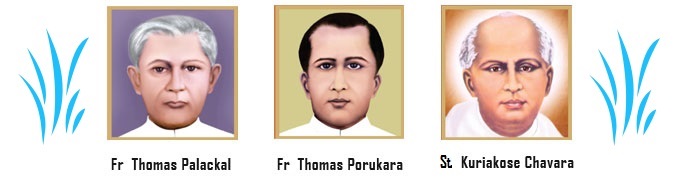
They were two zealous priests: Fr. Thomas Palackal and Fr. Thomas Porukara. Though they enjoyed parish ministry, they had a great desire to spend the rest of their lives in prayer and meditation. Hence they approached their Ordinary, Bishop Maurillius Stabilini of the Vicariate Apostolic of Verapoly in Kerala for permission to retire to a quiet place. But their bishop had a different idea. He advised them to found a religious house so that they might do good to the people in the world too. This was in 1829 AD.
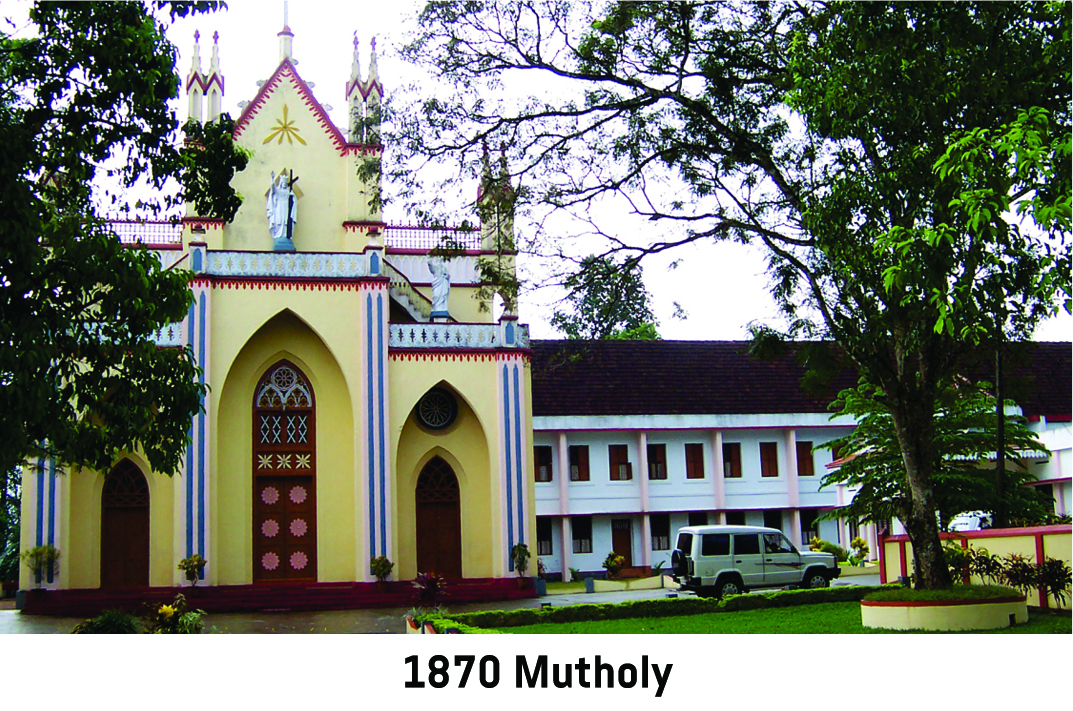
Both Fr. Palackal and Fr. Porukara thought it was a great idea. Fr. Kuriakose Elias Chavara, who was a disciple of both, shared in their enthusiasm for starting a religious community. On May 11, 1831, their cherished dream of a religious house was actualized. A small religious community began to take shape on the beautiful hill of Mannanam, near Kottayam, in Kerala State, India.
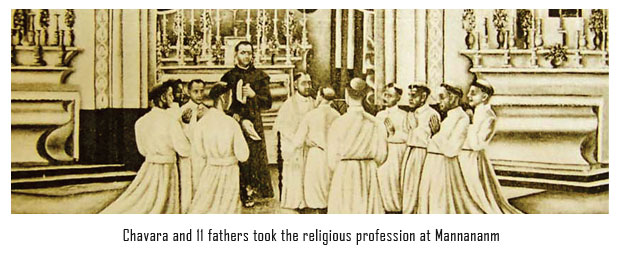
Two years later, in 1833, a seminary was started in Mannanam for training candidates to priesthood and religious life. But by the time the religious congregation was canonically erected on December 8, 1855 with the first eleven fathers making their religious profession, both Fr. Palackal (+1841) and Fr. Porukara (+1846) had gone to meet their Lord. Hence the responsibility fell on the young, but able shoulders of Fr. Kuriakose Chavara to guide the destiny of their community. Brother Jacob Kanianthara, who assisted the founding fathers in their new venture, made his religious profession in 1865.
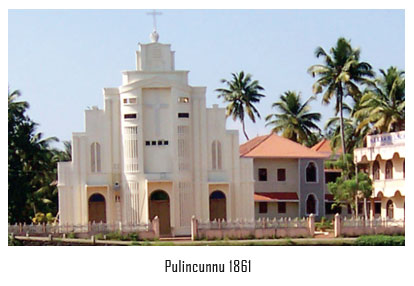
The name of Mary Immaculate has been invariably attached to the congregation from the very beginning and this congregation was originally known as the "Servants of Mary Immaculate". Since during the early period of this Religious Congregation the Vicars Apostolic of Verapoly were Carmelites and Carmelite missionaries were guiding the new religious community, the Carmelite influence was there from the very beginning of the Congregation. The rules of the Carmelites with some modification were given to them in 1855. In 1861, the community got affiliated to the Order of the Carmelites with the title TOCD (Third Order of the Carmelites Discalced). In 1885 the congregation got its pontifical status and in 1906 the approval of the constitution was given in perpetuum. In 1958 the name of the congregation was changed to "Carmelites of Mary Immaculate" (CMI) and the revised constitution was approved ad experimentum. In 1967 the congregation received the status of Pontifical Exemption.
The Congregation from its beginning exercised itself in such activities as the Church in Kerala was in need of at the particular times. It started with preaching retreats, conducting seminaries and training of priests; met the challenge of educating the youth and disseminating Christian literature; laboured for the conversion of non-Christians and for the reunion of separated brethren; undertook works of mercy and started charitable institutions.
The mission work of the CMI Congregation gathered new dimension and momentum as local churches were entrusted to it beyond the boundaries of Kerala. In 1962 Chanda took shape as the first missionary Ordinate of the Syro Malabar Church and was entrusted to the Congregation. Since then new mission dioceses and regions were erected in central and north India. There are now six dioceses in north India entrusted to the Congregation, viz., Chanda, Sagar, Jagdalpur, Bijnor, Rajkot and Adilabad. These six dioceses are headed by CMI Bishops. This is indeed a milestone in the progress of the CMI Missions and an abiding evidence of recognition by the Apostolic See.
At present there are more than two thousand and five hundred members in the Congregation including priests, brothers and seminarians. While most of our members minister to the needs of the people in India, there are some who serve in different countries of Africa, Europe, South America, Papua New Guinea, Madagascar, the United States, Canada and Australia.
For the sake of administration the congregation is divided into nine provinces, four vice-provinces and one region.
SECOND EDITION OF HISTORY
A BRIEF HISTORY
The Congregation of the Carmelites of Mary Immaculate (C.M.I) had its beginnings in the first half of the 19th century. When two zealous priests, Fr.Thomas Palackal and Fr.Thomas Porukara of the Vicariate Apostolic of Verapoly in Kerala, sought to live in retirement and prayer, their Ordinary, the Vicar Apostolic, Bishop Maurilius Stabilini advised them to found a religious house so that they might do good to the people in the world too. This was in 1829 A.D.
On May 11, 1831, a small house was started at Mannanam in the then Travancore State. Some more priests and clerics joined the Founding Fathers, and thus a small religious community took shape. Blessed Kuriakose Elias Chavara (whose beatification was on February 8, 1986), who was a devoted disciple of Fr.Palackal, had associated himself with the religious community from its very beginning. On December 8, 1855, the religious congregation was canonically erected. Since then the name of Mary Immaculate has been invariably attached to the title. Blessed Chavara, the only surviving founder, was appointed the first Superior of the Congregation.
Since during the early period of this Religious Congregation the Vicars Apostolic of Verapoly were Carmelites and Carmelite missionaries were guiding the new religious community, the Carmelite influence was there from the very beginning of the Congregation. The rules of the Carmelites with some modifications were given to them in 1855. In 1861 the Community was affiliated to the Order of Carmelites with the title T.O.C.D. (Third Order of the Carmelites Discalced).
The Constitutions were approved ad experimentum by the Apostolic See in 1885. In 1958 the name was changed to C.M.I. (Carmelites of Mary Immaculate). The Congregation was granted pontifical exemption in 1967.
The Congregation from its beginning exercised itself in such activities as the Church in Kerala was in need of at the particular times. It started with preaching retreats, conducting seminaries and training of priests; met the challenge of educating the youth and disseminating Christian literature; laboured for the conversion of non-Christians and for the reunion of separated brethren; undertook works of mercy and started charitable institutions.
The mission work of the C.M.I. Congregation gathered new dimension and momentum as local churches were entrusted to it beyond the boundaries of Kerala. In 1962 Chanda took shape as the first missionary Ordinate of the Syro-Malabar Church and was entrusted to the Congregation. Since then New Mission Dioceses and Regions were erected in Central and North India. There are now six dioceses in North India entrusted to the Congregation, viz, Chanda, Sagar, Jagdalpur, Bijnor, Rajkot and Adilabad. These six dioceses are headed by CMI Bishops. This is indeed a milestone in the progress of the CMI Missions and an abiding evidence of recognition by the Apostolic See.
For the sake of administration, the congregation is divided into eight Provinces, five Vice-Provinces and one Region.
At present the congregation has more than 2,500 members spread all over India. Some of them are in Europe, U.S.A., Latin America, Africa, Madagascar and in Papua New Guinea engaged in studies and apostolic activities.
A Prior General elected from the Congregation, assisted by four Councillors is at the head of the administration. The head quarters of the whole Congregation is at Ernakulam, The Prior General's House, near the Ernakulam South Railway Station. This was inaugurated on September 8, 1941.
|
|
 |
Search Our Members Here |
 |
| Enter member's family name: |
| |
|
| |
|